

DEFACED — by shinyhunters kuroi.


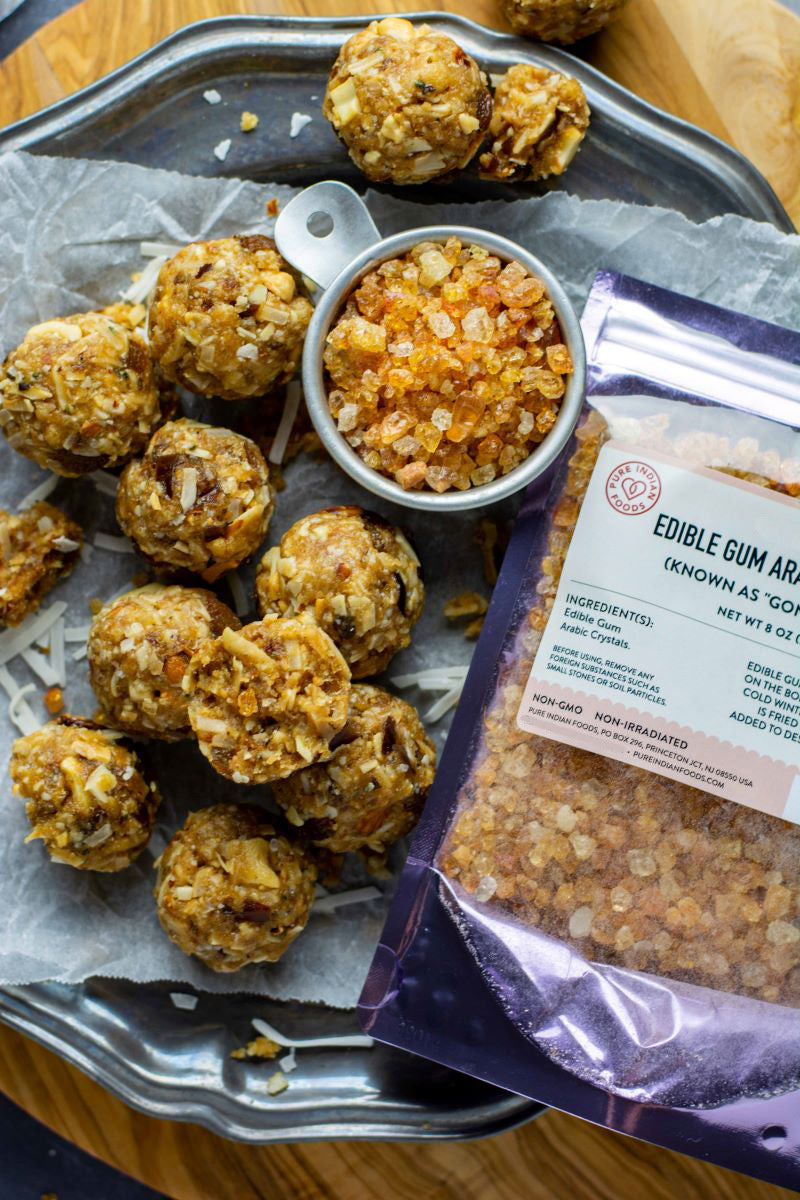
Most of us are more familiar with Gum Arabic than we realize. It’s often found in chewing gum, baked goods, candies, ice cream, frostings, fillings, soft drinks, syrups, cocktails and more. In India, it may be added to laddoos. Laddoos are a rich, chewy and nourishing treat enjoyed in months with wet or cold weather as they are not only delicious, but hearty, nutritious and warming, making them perfect for the winters in Northern India, or any cold climate.
Gond (pronounced "gohnd") is the Indian name for Gum Arabic. Is it made from the hardened resin of the Acacia Senegal and Acacia Seyal. Its use dates back about 5,000 years to ancient Egypt.
Gond is known by many other names including edible gum, acacia gum, gum Sudani and Indian gum. It’s stabilizing and binding properties make it vastly popular throughout many industries including pharmaceuticals, textiles, cosmetics, printing and painting. However, because it is tasteless, odorless, nutritious and edible, and it’s a fabulous natural thickener and emulsifier, and an absolute favorite of the food industry.
In India, it’s customary to fry the whole crystals in ghee before grinding for use in various beverages and special sweet and savory treats. It’s often blended with nuts and coconut, various seeds, ghee, jaggery, sugar, spices and salt. A few favorite Indian treats featuring Gond include Gond Laddus, Panjiri, Jaripalla Churma, Gond ka Sheera and Kankari Ajwain (aka Mukhwas).
Similar to badam pisin, almond gum, gondh katira which is made from the Almond Tree. Our Gond is made from the Gum Arabic Tree.

Ingredients:
Instructions:
Most of us are more familiar with Gum Arabic than we realize. It’s often found in chewing gum, baked goods, candies, ice cream, frostings, fillings, soft drinks, syrups, cocktails and more. In India, it may be added to laddoos. Laddoos are a rich, chewy and nourishing treat enjoyed in months with wet or cold weather as they are not only delicious, but hearty, nutritious and warming, making them perfect for the winters in Northern India, or any cold climate.
Gond (pronounced "gohnd") is the Indian name for Gum Arabic. Is it made from the hardened resin of the Acacia Senegal and Acacia Seyal. Its use dates back about 5,000 years to ancient Egypt.
Gond is known by many other names including edible gum, acacia gum, gum Sudani and Indian gum. It’s stabilizing and binding properties make it vastly popular throughout many industries including pharmaceuticals, textiles, cosmetics, printing and painting. However, because it is tasteless, odorless, nutritious and edible, and it’s a fabulous natural thickener and emulsifier, and an absolute favorite of the food industry.
In India, it’s customary to fry the whole crystals in ghee before grinding for use in various beverages and special sweet and savory treats. It’s often blended with nuts and coconut, various seeds, ghee, jaggery, sugar, spices and salt. A few favorite Indian treats featuring Gond include Gond Laddus, Panjiri, Jaripalla Churma, Gond ka Sheera and Kankari Ajwain (aka Mukhwas).
Similar to badam pisin, almond gum, gondh katira which is made from the Almond Tree. Our Gond is made from the Gum Arabic Tree.
Ingredients:
Instructions:




Pop in your email - you’ll be asked to log in next and will get your discount during checkout.